

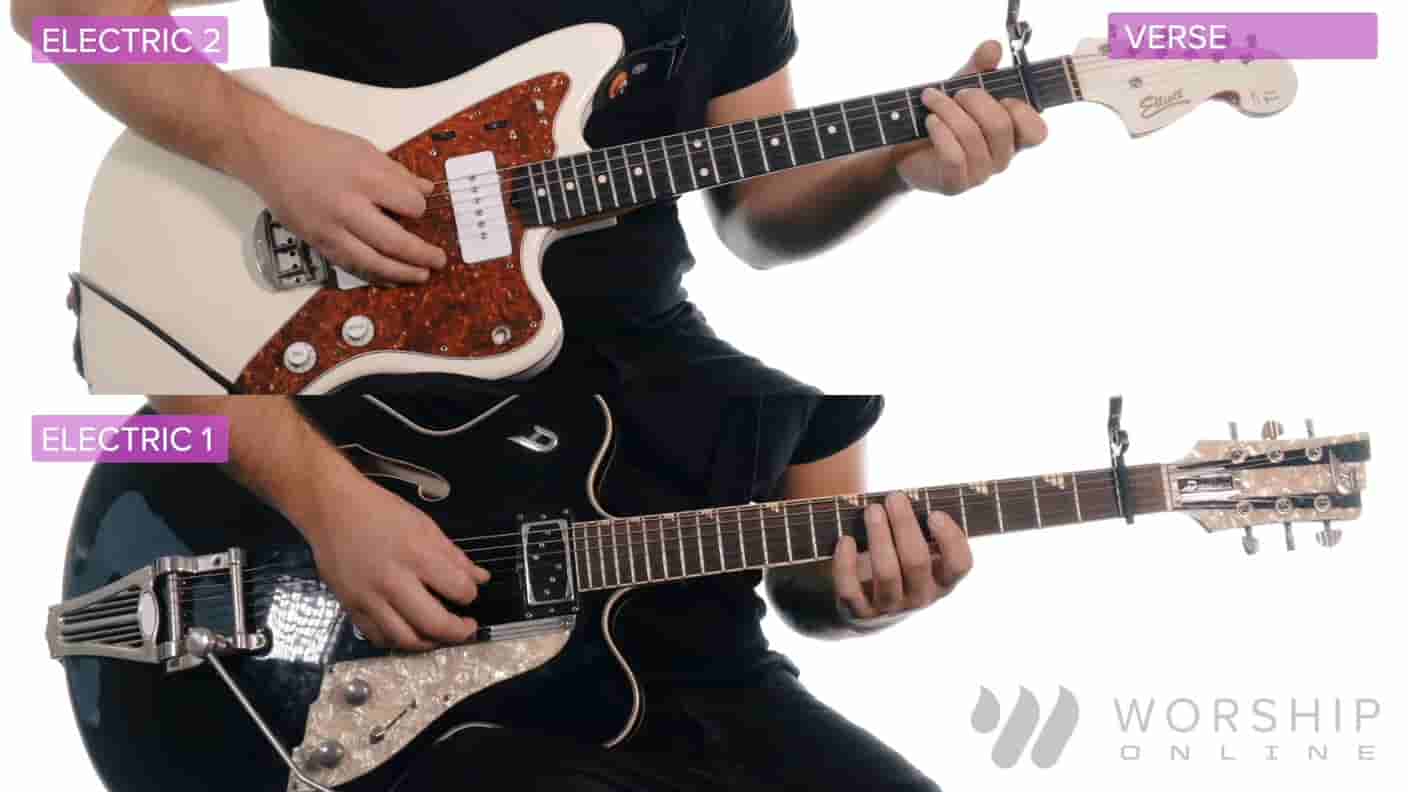
INTRO
VERSE 1
When I think of the cross
The cross of Christ
Praise begins to rise
Praise begins to rise
When I look on the Lamb
The wound-ed Lamb
My hands will lift to Him
My hands will lift to Him
The cross of Christ
Praise begins to rise
Praise begins to rise
When I look on the Lamb
The wound-ed Lamb
My hands will lift to Him
My hands will lift to Him
CHORUS 1
Isn't He worthy of all our wor-ship
Isn't He worthy of the
praises we bring
How could my heart not
sing halle-lu - jah
For the blood is still the blood
And the King is still the King
Isn't He worthy of the
praises we bring
How could my heart not
sing halle-lu - jah
For the blood is still the blood
And the King is still the King
TURNAROUND
VERSE 2
When I recount the cost
The cost of grace
You bought my sin and shame
I'll never be the same
When I look at my life
How good You've been
Oh I can't hold it in
I'll never hold it in
The cost of grace
You bought my sin and shame
I'll never be the same
When I look at my life
How good You've been
Oh I can't hold it in
I'll never hold it in
CHORUS 2
Isn't He worthy of all our wor-ship
Isn't He worthy of the
praises we bring
How could my heart not
sing halle-lu - jah
For the blood is still the blood
And the King is still the King
Isn't He worthy of the
praises we bring
How could my heart not
sing halle-lu - jah
For the blood is still the blood
And the King is still the King
INSTRUMENTAL
VERSE 3
When I think of the tomb
The emp - ty tomb
I'm filled with gratitude
Endless grati-tude
For He defeated death
And He reigns a - bove
No grave could hold His love
No grave could hold His love
The emp - ty tomb
I'm filled with gratitude
Endless grati-tude
For He defeated death
And He reigns a - bove
No grave could hold His love
No grave could hold His love
VERSE 4
When I think of the tomb
The emp - ty tomb
I'm filled with gratitude
Endless grati-tude
For He defeated death
And He reigns a - bove
No grave could hold His love
No grave could hold His love
The emp - ty tomb
I'm filled with gratitude
Endless grati-tude
For He defeated death
And He reigns a - bove
No grave could hold His love
No grave could hold His love
CHORUS 3
Isn't He worthy of all our wor-ship
Isn't He worthy of the
praises we bring
How could my heart not
sing halle-lu - jah
For the blood is still the blood
And the King is still the King
Isn't He worthy of the
praises we bring
How could my heart not
sing halle-lu - jah
For the blood is still the blood
And the King is still the King
CHORUS 4
Isn't He worthy of all our wor-ship
Isn't He worthy of the
praises we bring
How could my heart not
sing of all You've done for me
For the blood is still the blood
And the King is still the King
Isn't He worthy of the
praises we bring
How could my heart not
sing of all You've done for me
For the blood is still the blood
And the King is still the King
TAG
For the blood is still the blood
And the King is still the King
And the King is still the King
OUTRO
Still The King - In the Bible [Verses & Devotional]
There’s something honest and steady about Chris Tomlin’s “Still The King.” It’s not trying to convince you of something new or flashy; it gently reminds you of the old, unshakable truths of the gospel — the cross, the cost, the empty tomb, and Christ’s rule — and asks for a heart-response: praise. When the song says “When I think of the cross…praise begins to rise,” it’s pointing us back to the event that changed everything. Scripture does the same. Isaiah 53 and passages like John 1:29 (“Behold, the Lamb of God…who takes away the sin of the world”) and 1 Peter 2:24 (that “he himself bore our sins in his body on the tree”) invite us to look at the Lamb, remember the substitutionary suffering of Christ, and respond with worship. The lyric “My hands will lift to Him” finds its echo in the Psalms (for example Psalm 63:4) and in the biblical rhythm of lifting our hands and hearts as an outward sign of inward thanksgiving (Psalm 134:2).
That line “For the blood is still the blood” is short but theologically rich. The Bible consistently points to the power of Christ’s shed blood for forgiveness and redemption (Hebrews 9:12–14; Ephesians 1:7; Hebrews 10:19–22). Those verses tell us that the sacrifice once made is effective and ongoing for all who trust — not because rituals continue to produce it, but because Jesus’ work was final and sufficient. That is what the song means by “still”: the cost paid is not historical trivia; it remains the living means by which we are forgiven and reconciled.
“When I recount the cost…You bought my sin and shame” turns our attention to grace as a costly purchase (1 Peter 1:18–19, which speaks of being redeemed with precious blood). Romans 5:8 reminds us that God’s love is shown to us in that while we were still sinners, Christ died for us. The song’s confession “I’ll never be the same” is precisely the Christian claim — that being held by grace transforms identity and direction (2 Corinthians 5:17; Galatians 2:20). The gospel doesn’t merely change our future standing before God; it reorients how we live now.
The refrain about the empty tomb — “He defeated death and He reigns above / No grave could hold His love” — carries straight into the heart of the resurrection testimony (1 Corinthians 15:3–4; Matthew 28:6). Scripture celebrates that death was defeated (1 Corinthians 15:54–57), that Christ was raised and now reigns (Revelation 1:18, Philippians 2:9–11). The song’s image “no grave could hold His love” resonates with Romans 8:38–39: nothing, not death nor anything else, can separate us from the love of God in Christ. That’s not merely poetic comfort; it’s the conviction that the resurrection guarantees God’s ongoing, living presence and power in our lives.
The repeated question “Isn’t He worthy of all our worship?” lands on an essential biblical posture. Scripture calls us to worship God in spirit and truth (John 4:23–24), to bow before the One who is holy and worthy (Revelation 4:11). Worship isn’t simply a liturgical act; it’s the right response to what God has done — to the cross, to the rescue, to the victory over death, and to the present reign of the King. The song’s simplicity — a steady refrain, repeated lines — helps remind us that worship is also a daily, sometimes small but faithful returning of our hearts to Jesus.
Practically, the song and the Bible together invite a few simple, concrete responses: to remember the cross regularly (not merely as history but as the source of your daily forgiveness), to recount the cost and allow it to shape your humility and gratitude, to live in the light of the resurrection so that fear and passivity lose their grip, and to offer sincere worship — in private and in community — because God is worthy. Hebrews 13:8 (“Jesus Christ is the same yesterday and today and forever”) underscores the comfort of the refrain: the King’s character and saving work do not change, even when our circumstances do.
So here’s the question I want to leave you with, one that takes the song’s simple truth and makes it personal: if the blood that paid for your rescue is still powerful and the King who rose is still reigning, what is one fear, habit, or withheld praise you will refuse to let keep its hold on you this week?