

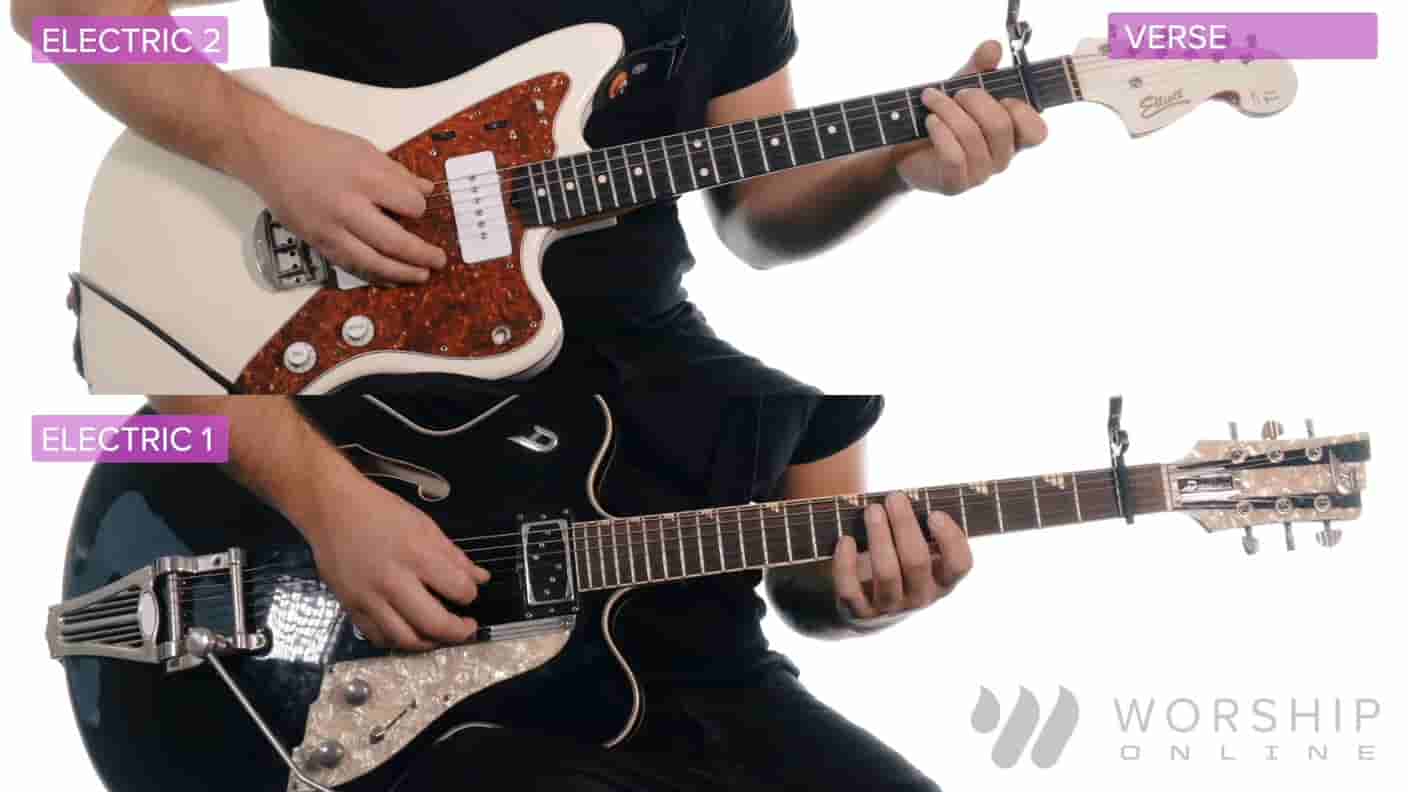
INTRO 2X
VERSE 1
You were with us in the fire
And we were not burned in the flames
We were not burned in the flames
You were in that den of lions
And we were unharmed and unscathed
So, why would we ever be afraid?
And we were not burned in the flames
We were not burned in the flames
You were in that den of lions
And we were unharmed and unscathed
So, why would we ever be afraid?
PRE-CHORUS
'Cause we know who You are
We know who You are
We know who You are
CHORUS 1
The greater the storm
The louder our song will be
Battles may roar
But we sing from victory
Darkness will tremble
Prison walls are gonna shake
'Cause fear has no power when we
worship Your name
The louder our song will be
Battles may roar
But we sing from victory
Darkness will tremble
Prison walls are gonna shake
'Cause fear has no power when we
worship Your name
TURNAROUND 2X
VERSE 2
You were with us in the desert
And You led us out and made a way
Fire by night, and cloud by day
And in the valley of the shadow
Never once did You forsake
So, why would we ever be afraid?
And You led us out and made a way
Fire by night, and cloud by day
And in the valley of the shadow
Never once did You forsake
So, why would we ever be afraid?
PRE-CHORUS
'Cause we know who You are
Oh, we know who You are
Oh, we know who You are
CHORUS 2
The greater the storm
The louder our song will be
Battles may roar
But we sing from victory
Darkness will tremble
Prison walls are gonna shake
'Cause fear has no power when we
worship Your name
The louder our song will be
Battles may roar
But we sing from victory
Darkness will tremble
Prison walls are gonna shake
'Cause fear has no power when we
worship Your name
INTERLUDE
BRIDGE 1
The enemy knows what Your name is
And scatters when we're giving
You our praises
The only overcomer of the grave is
Jesus, Jesus
And scatters when we're giving
You our praises
The only overcomer of the grave is
Jesus, Jesus
BRIDGE 2
The enemy knows what Your name is
And scatters when we're giving
You our praises
The only overcomer of the grave is
Jesus, Jesus
And scatters when we're giving
You our praises
The only overcomer of the grave is
Jesus, Jesus
BRIDGE 3
The enemy knows what Your name is
And scatters when we're giving
You our praises
The only overcomer of the grave is
Jesus, Jesus
And scatters when we're giving
You our praises
The only overcomer of the grave is
Jesus, Jesus
REFRAIN
All glory to the Name
All glory to the Name
All glory to the Name of Jesus
All glory to the Name
All glory to the Name of Jesus
CHORUS 3
The greater the storm
The louder our song will be
Battles may roar
But we sing from victory
Darkness will tremble
Prison walls are gonna shake
'Cause fear has no power when we
worship Your name
The louder our song will be
Battles may roar
But we sing from victory
Darkness will tremble
Prison walls are gonna shake
'Cause fear has no power when we
worship Your name
TAG 1
'Cause fear has no power when we
worship Your name
worship Your name
OUTRO 4X
ENDING
Fear Has No Power - In the Bible [Verses & Devotional]
When I listen to Phil Wickham sing, “You were with us in the fire / And we were not burned in the flames,” I’m immediately pulled into the Bible’s grand stories of a God who shows up in the thick of trouble. Those words echo Isaiah’s promise: “When you pass through the waters, I will be with you; and through the rivers, they shall not overwhelm you; when you walk through fire you shall not be burned” (Isaiah 43:2). They also call to mind the three friends in the fiery furnace who walked away untouched (Daniel 3) and Daniel in the lions’ den whose God shut mouths that would have devoured him (Daniel 6). The song doesn’t only reminisce; it reminds us of a pattern in Scripture: God’s presence with His people in peril transforms what looks like defeat into deliverance.
The lyric “You were with us in the desert / And You led us out and made a way / Fire by night, and cloud by day” is basically a musical retelling of Exodus: God leading Israel with a pillar of cloud and fire (Exodus 13:21–22), guiding in the wilderness when provision and direction seemed impossible. “In the valley of the shadow / Never once did You forsake” brings us to David’s prayerful confidence: “Yea, though I walk through the valley of the shadow of death, I will fear no evil: for thou art with me” (Psalm 23:4). These biblical memories are not cheap nostalgia; they are truth-wrought anchors. When the song asks, “So, why would we ever be afraid?” it’s not pretending fear never knocks—rather it’s pointing us back to the irrefutable history and character of God so that fear loses its authority.
That line, “’Cause we know who You are,” is crucial. Knowing God is more than intellectual assent; it’s the heart’s knowledge that the God who saves is powerful, present, and faithful. Scripture expresses that confidence in many ways: “If God is for us, who can be against us?” (Romans 8:31) and “Greater is He who is in you than he who is in the world” (1 John 4:4). When worship calls out God’s name, we’re not just singing words into the air; we are declaring what is true about the One who holds our lives. Worship is an act of remembering and aligning: remembering who God is and aligning our fear-filled hearts with that truth.
The chorus—“The greater the storm / The louder our song will be… Prison walls are gonna shake / ’Cause fear has no power when we worship Your name”—brings to mind Acts 16, where Paul and Silas prayed and sang hymns in a Philippian prison. An earthquake opened the prison doors and the jailer’s heart was moved toward God. There’s a biblical motif that praise and worship are not a last resort or a spiritual gimmick, but a form of spiritual resistance and trust. Think of Jehoshaphat: he sent singers before the army (2 Chronicles 20), and the Lord set ambushes against his enemies. When we worship, we are, in a sense, speaking the truth of who God is into the present moment—and God’s truth changes circumstances in ways we can’t manufacture.
The bridge—“The enemy knows what Your name is / And scatters when we’re giving You our praises / The only overcomer of the grave is Jesus”—connects worship to victory on a cosmic scale. Jesus’ life, death, and resurrection are the decisive overturning of fear and death. “I am he who lives; I was dead, and behold I am alive forevermore” (Revelation 1:18) and “Thanks be to God, who gives us the victory through our Lord Jesus Christ” (1 Corinthians 15:57). Because Jesus has the keys of Death and Hades and because He rose, we can sing not from desperation but from victory. That doesn’t mean every storm ends the moment we start to worship. It means worship aligns our perspective with the finished work of Christ and opens the door for God’s power to move—sometimes immediately, sometimes through a long refining process—but always toward our good and His glory.
So here’s a question to sit with: when the next storm comes, will you reach for the familiar currents of fear or will you intentionally name and worship the one whose presence has changed history—and by doing so, let that worship reshape how fear speaks into your life?